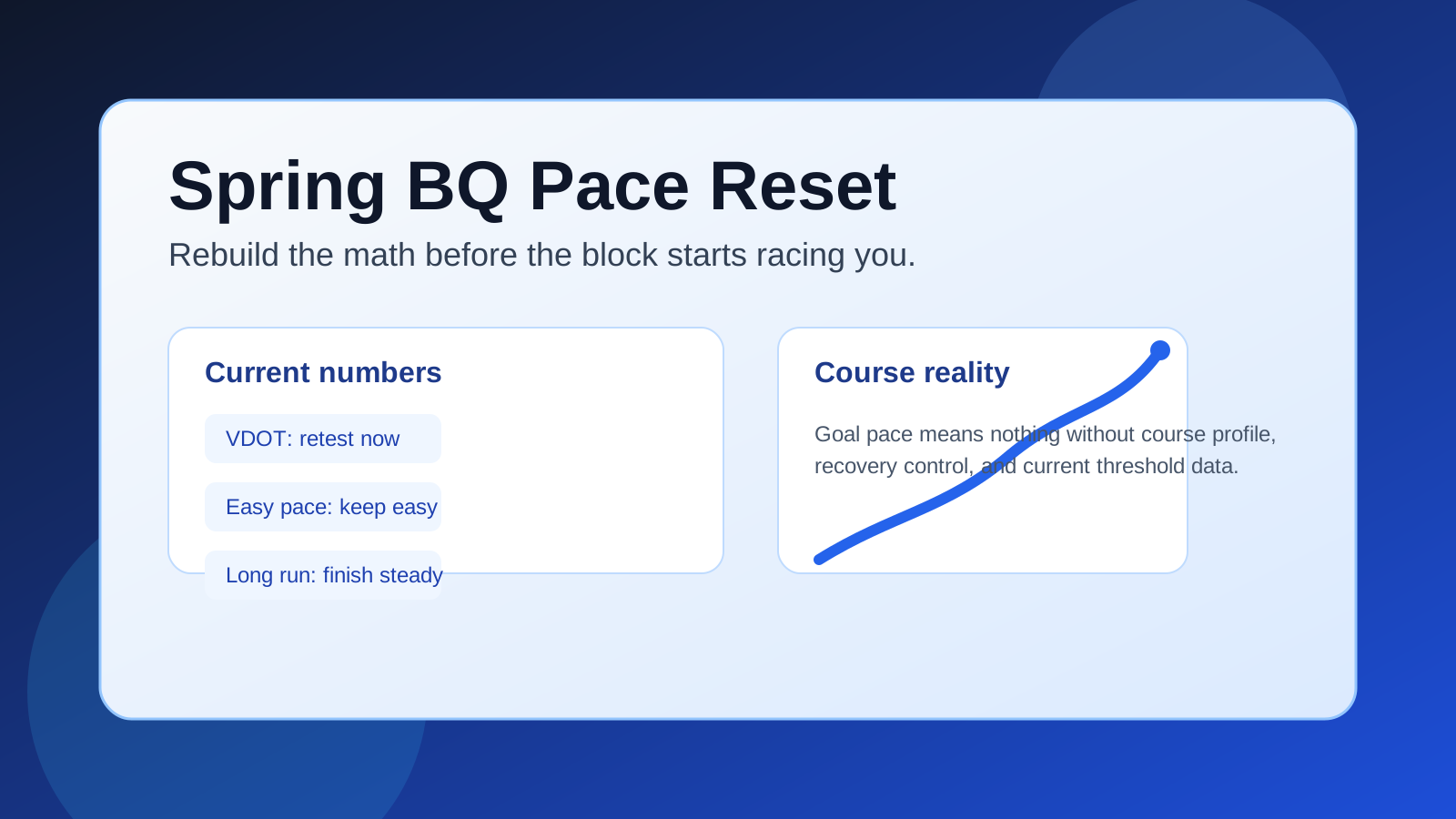
If your Boston Qualifier build still runs on the pace card you made in December, you are probably training on stale numbers. That is how strong runners turn spring fitness into late-race panic. By March, the leak is rarely motivation. It is pace drift, fake recovery days, and workout splits your current body no longer supports.
The timing is real. On June 18, 2025, the B.A.A. confirmed the April 20, 2026 Boston Marathon and said 1,500+ feet net-downhill qualifiers receive time indexing for 2027 registration. Strava's 2025 Year in Sport report also said running stayed the platform's most logged sport and 54% of athletes tracked multiple sports.
That means more runners are building for big spring goals. It also means more runners are overcooking workouts with bad math.
3 SEO-Ready Title Options
- 7 Pace Fixes Before You Chase a Boston Qualifier in 2026
- 6 Spring Marathon Math Mistakes That Quietly Kill BQ Attempts
- 5 Numbers Every Runner Should Recheck Before an April 2026 Marathon
Personal Experience #1: My Pace Card Was Already Old
I once carried a winter threshold pace into a March marathon block because I did not want to admit fitness had shifted. The workouts looked brave on paper. They felt awful by the second mile of every long-run segment.
The fix was not dramatic. I reran the numbers, reset training paces, and stopped pretending goal pace should appear in every session.
Pro Tip: Recalculate VDOT after every tune-up race or meaningful fitness test. Hope is not a pacing metric.
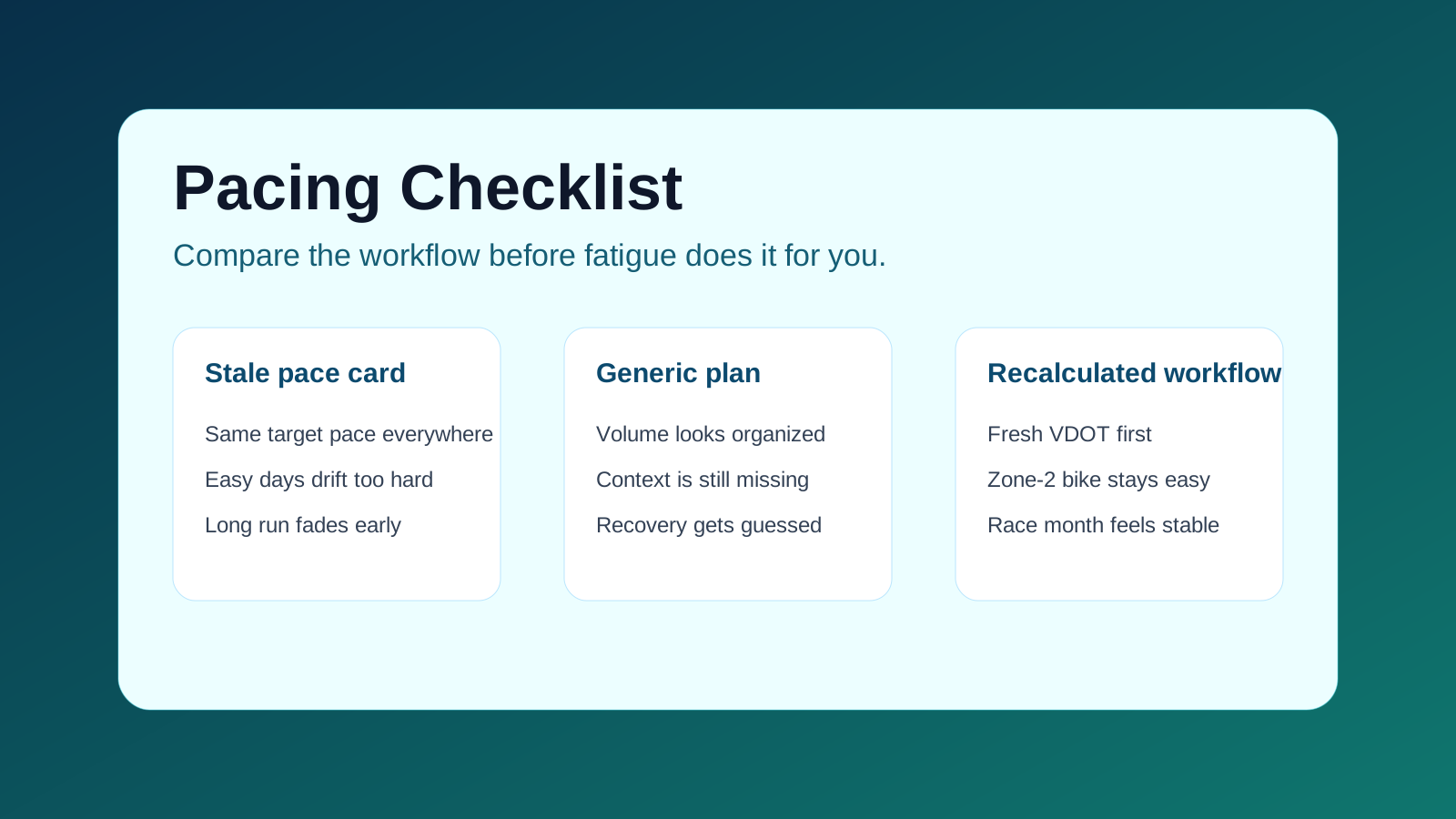
Quick Comparison: What Usually Goes Wrong
| Workflow | What runners do | Hidden cost by race month | Better move |
|---|---|---|---|
| Old pace card from winter | Keep every workout tied to one stale race target | Intervals feel harder, easy days stop being easy | Recalculate from current fitness |
| Generic marathon plan | Follow volume and pace without context | The plan ignores your actual threshold and recovery | Customize the numbers first |
| Web Ocean Sports workflow | Reset run pace and low-impact recovery together | Lower error risk and better consistency | Use fresh VDOT plus controlled zone-2 bike work |
The cleanest workflow on this site is simple. Use the Running VDOT Calculator to reset current training paces. Then protect your recovery days with the Cycling Power Zones Calculator so you stop turning easy cross-training into another hidden workout.
Personal Experience #2: One Runner Had to Scrap the "Easy Downhill" Plan
In October 2025, a runner in our local group wanted to chase his qualifier on a steep net-downhill course. After the B.A.A. update, we stopped treating that as a shortcut and rebuilt the block around a flatter option with cleaner pacing. He lost the fantasy of a free buffer, but he gained a plan he could actually trust.
That is the part many runners miss. Rule changes and course context matter just as much as pace charts.
Pro Tip: If your qualifying plan depends on downhill geometry more than controlled pacing, you do not have a stable plan yet.
Personal Experience #3: A Bike Day Saved the Long Run
Another runner I train with kept arriving at Sunday long runs already cooked. The reason was not a lack of grit. It was that every "easy" bike ride had slowly drifted into tempo effort.
We set a real zone-2 cap, cut the ego, and kept the aerobic work. Within three weeks, her long-run quality came back and the last 30 minutes stopped looking like survival mode.
That is why I keep pointing runners back to a numbers-first setup instead of another motivational speech. If your inputs are wrong, your confidence will lie to you.
If you want the bigger seasonal framework, pair this with the 2026 race-day blueprint.
The 7 Pace Fixes I Would Make This Week
- Re-test current fitness instead of defending an old pace chart.
- Set easy-day limits before you set interval splits.
- Separate marathon pace from everyday training ego.
- Check course profile before you anchor the goal.
- Keep one hard run, one long run, and no bonus hero sessions.
- Use zone-2 cycling only if it truly stays easy.
- Recalculate again after the next tune-up race.
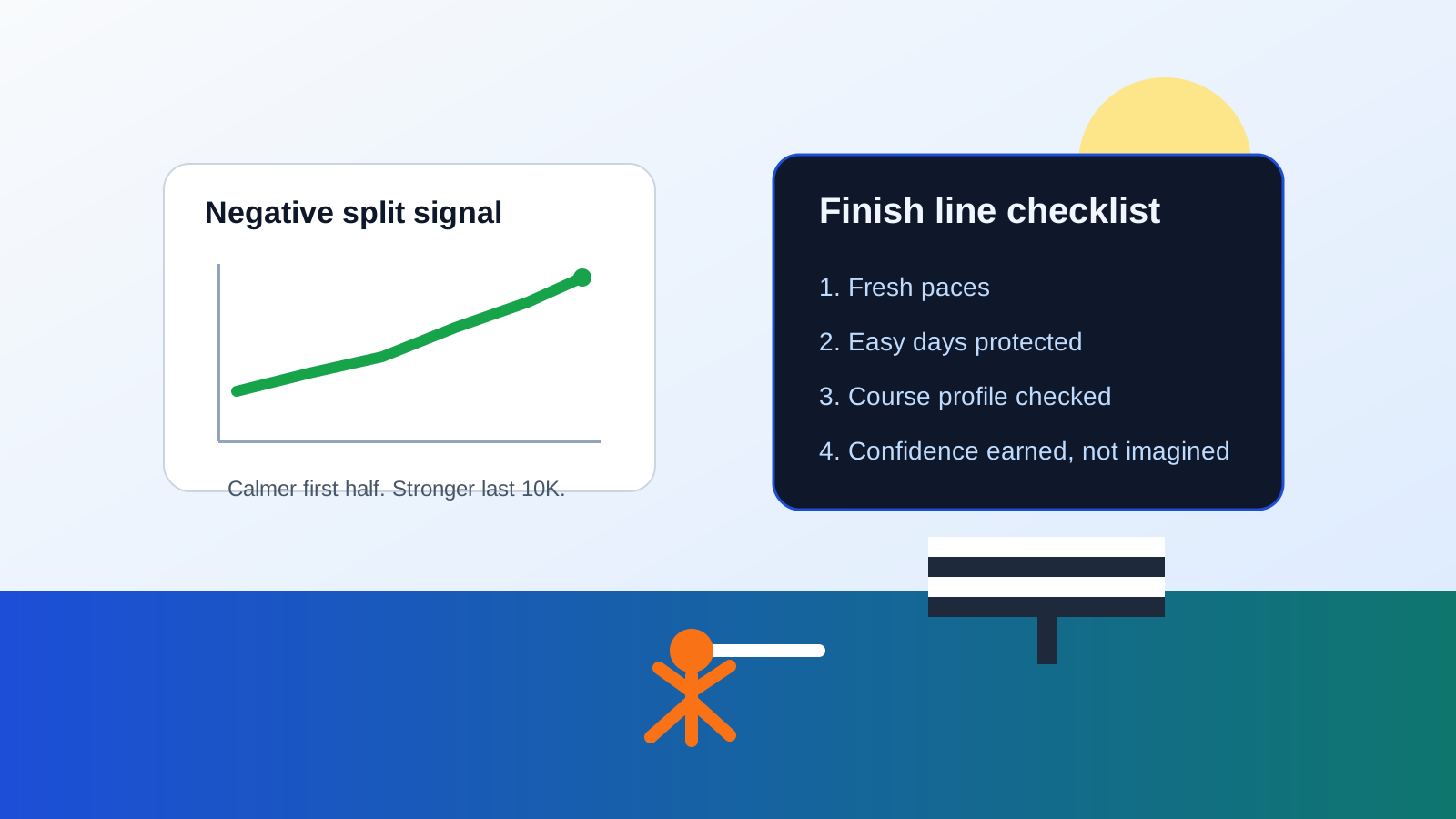
If your spring block feels harder than it should, start by fixing the math. That is usually the fastest way to calm the whole plan down.
If you are targeting April 20, 2026 or another spring marathon, drop your recent race result and weekly mileage in the comments.
Meta Description (140 chars): Reset VDOT, easy pace, and bike recovery before chasing a Boston Qualifier in 2026 with a smarter, calmer marathon build for April race day.