If two lifters post big totals and you still cannot tell who had the better day, absolute kilos are not enough. That is where coefficient scores earn their keep. Use the wrong one, though, and the comparison gets fuzzy fast.
3 SEO-Ready Title Options
- 8 Fast Rules for Choosing Wilks or DOTS in 2026
- 6 Mistakes Lifters Make When Comparing Wilks and DOTS Scores
- 5 Powerlifting Numbers That Matter More Than Raw Totals
Personal Experience #1: The Local Meet Debate Never Ends
At a small meet, two lifters finished arguing over who had the stronger performance. One was much lighter. One had the bigger total. The room split instantly because half the crowd only trusted raw kilos.
That debate is exactly why coefficient tools still matter. They help you compare output in context, not just in isolation.
Pro Tip: Always confirm which formula your meet, ranking sheet, or online leaderboard uses before you compare scores. The smartest spreadsheet still fails if the rules changed.
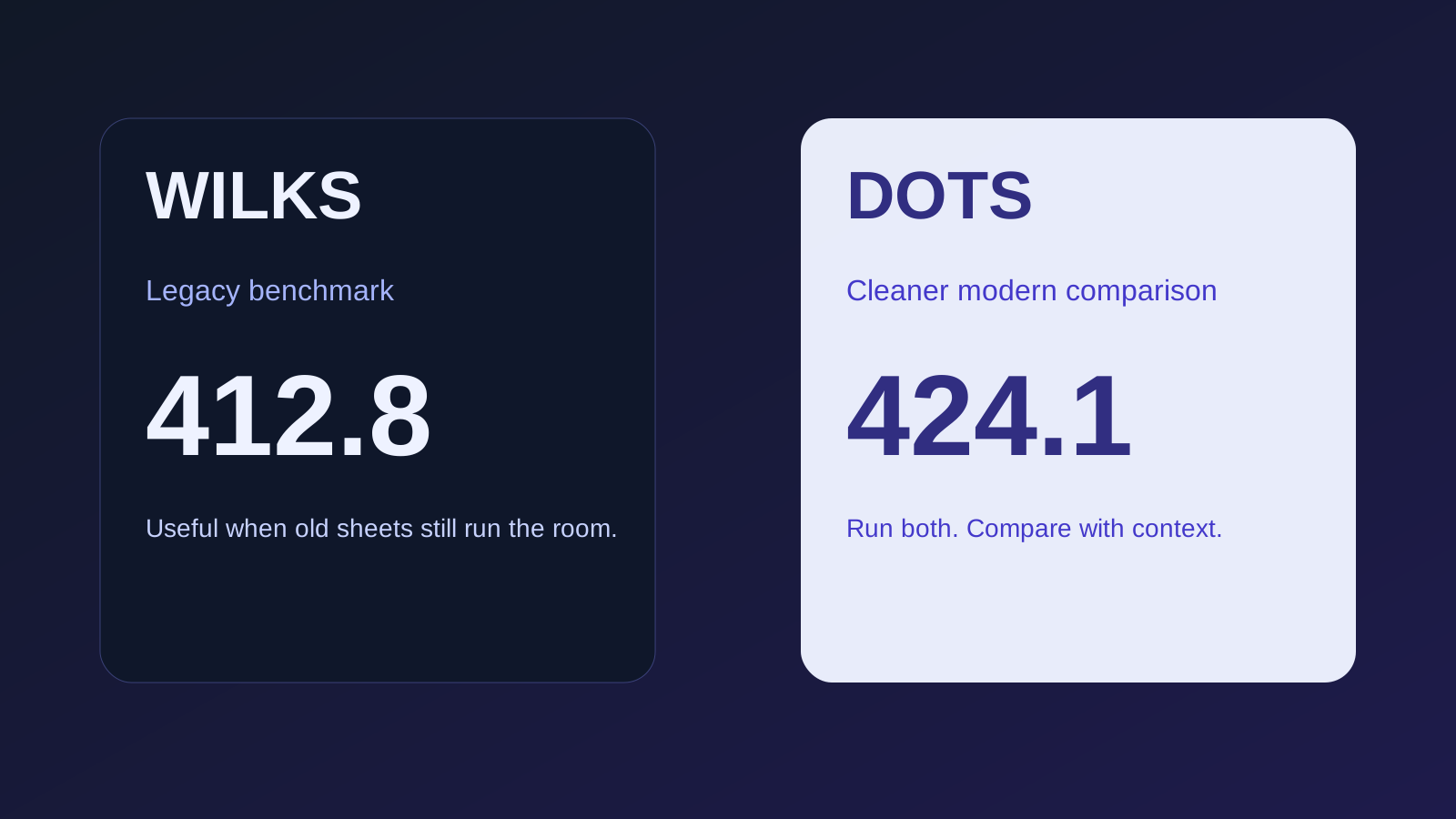
Wilks vs. DOTS at a Glance
| Question | Wilks | DOTS | Practical takeaway |
|---|---|---|---|
| What is it for? | Relative strength comparison | Relative strength comparison | Both normalize totals across body weights |
| Why do lifters still use it? | Legacy familiarity | Modern online comparison | DOTS usually feels easier to explain today |
| Where do people get confused? | Old formulas remain in old gym sheets | Some assume it is universal | Always check the scoring method first |
| Best use on this site | Quick personal benchmarking | Quick personal benchmarking | Run both in one place and compare trends |
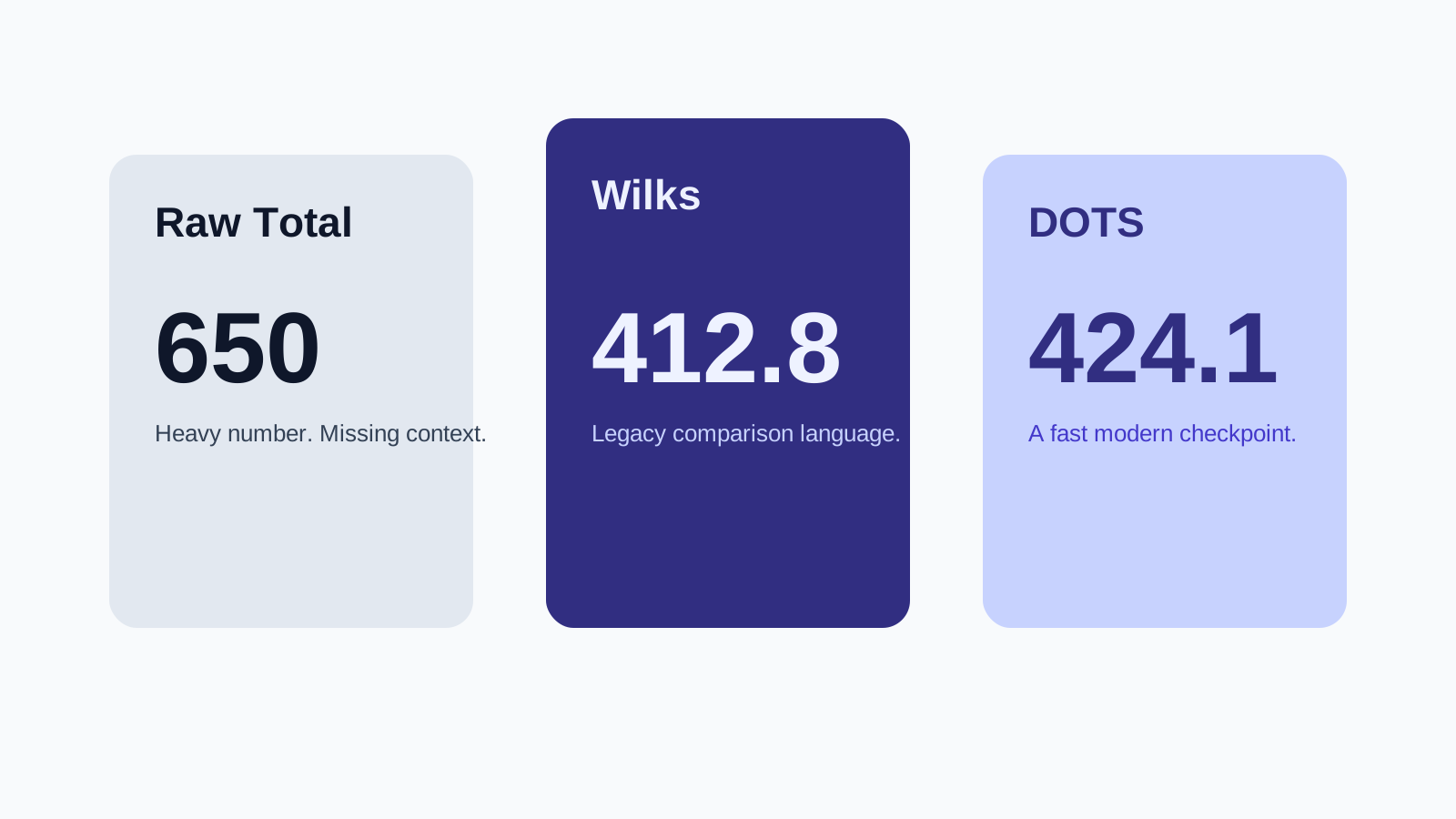
The cleanest move is simple: plug the same total and bodyweight into the Wilks and DOTS calculator, then track the trend over time instead of arguing off memory.
Personal Experience #2: Cutting Weight Changed the Story
I have seen lifters chase a lighter class, hit the same total, and suddenly look stronger on paper. Sometimes that tells a real story. Sometimes it just shows that the cut hurt performance less than expected.
That is why coefficient scores are useful but not magical. They sharpen comparison. They do not replace context like meet pressure, travel fatigue, or how aggressive the cut was.
When I Prefer DOTS
For quick athlete-to-athlete comparisons, DOTS usually makes the conversation easier. It feels closer to how lifters already think about fairness across lighter and heavier classes. It is also easier to present when someone wants a fast answer after a heavy training block.
Personal Experience #3: The Best Use Is Trend Tracking
The most useful case I keep coming back to is not leaderboard bragging. It is self-auditing. One lifter I worked with held bodyweight steady for eight weeks, improved his DOTS score, and finally saw proof that the block was working even before meet day.
That kind of clarity is what keeps people consistent. If you want a broader look at how precision affects trust, the same lesson shows up in our debugging journal.
Pro Tip: Do not compare a peak-week score to an off-season bodyweight and call it progress. Compare like with like, or the coefficient becomes a vanity filter.
The Website Hook That Actually Helps
The best tool is the one you will use after every meaningful block. That is why the site focuses on fast inputs, clear outputs, and no clutter between the lift and the answer. You can benchmark a score, save the context mentally, and get back to training.
If you want a no-drama answer, open the calculator, run both formulas, and write down the one your competition actually uses.
If your gym still uses an old formula sheet, drop a note in the comments and I can help you decode it.
Meta Description (140 chars): Compare Wilks and DOTS in 2026, avoid scoring mistakes, and benchmark lifting progress with clear context, fair comparisons, and confidence.